
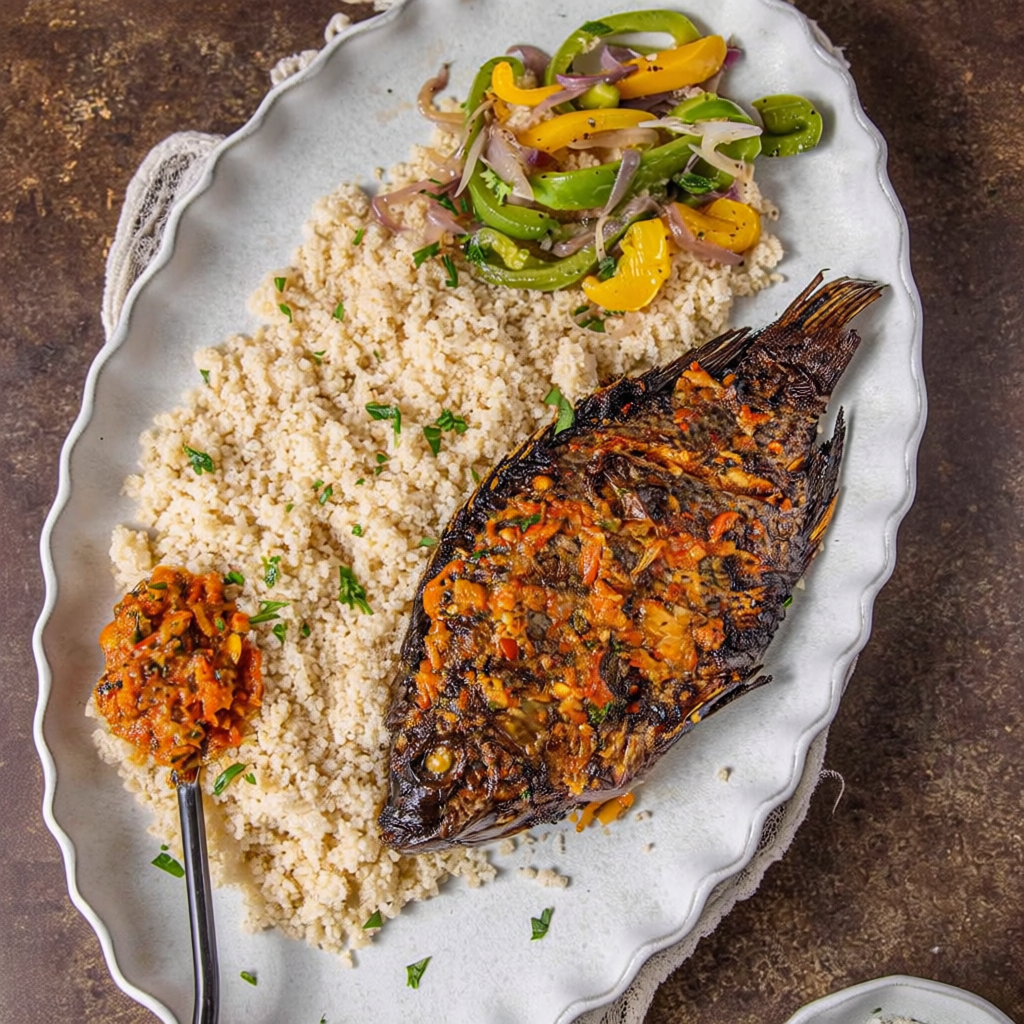
Attiéké is one of the most iconic dishes of Côte d’Ivoire and a favorite throughout West Africa. Made from fermented cassava that is grated, dried, and steamed, attiéké has a light, couscous-like texture and a mildly tangy flavor that sets it apart from any other grain. It is most commonly served with fried or grilled fish, fresh vegetables, and spicy pepper sauce, creating a meal that is both satisfying and refreshing.
This attiéké recipe recreates the authentic Ivorian experience using simple, accessible ingredients while respecting traditional preparation methods. Whether enjoyed for lunch, dinner, or during gatherings, attiéké is a dish that brings people together around bold yet balanced flavors.
What Is Attiéké?
Attiéké is a traditional Ivorian food made from fermented cassava pulp. The cassava is grated, fermented, pressed, dried, and granulated before being steamed. This fermentation process gives attiéké its signature slightly sour taste and airy texture.
In Côte d’Ivoire, attiéké is eaten daily and is commonly sold by street vendors alongside fried fish, onions, tomatoes, and hot pepper sauce. It is also widely enjoyed in Guinea and neighboring countries, especially during family meals, celebrations, and weekends. Because it absorbs sauces well, attiéké pairs beautifully with many West African dishes.
Ingredients
For the Attiéké
- 2 cups attiéké (instant or traditional)
- 1–2 tablespoons oil
- Salt to taste
For the Fried Fish
- 2 whole fish (tilapia, mackerel, or snapper), cleaned
- 1 teaspoon garlic powder
- 1 teaspoon paprika
- 1 teaspoon black pepper
- Salt to taste
- Oil for frying
For the Fresh Vegetable Mix
- 2 tomatoes, diced
- 1 onion, thinly sliced
- 1 cucumber, diced
- 1–2 tablespoons oil
- Salt and pepper to taste
- Optional: chili pepper or hot sauce
Instructions
- Prepare the Fish Clean the fish thoroughly and pat dry with paper towels. Season both sides with garlic powder, paprika, black pepper, and salt. Heat oil in a deep pan over medium heat and fry the fish until golden and crispy on both sides. Remove from the pan and place on paper towels to drain excess oil.
- Prepare the Attiéké Place the attiéké in a large bowl. If using instant attiéké, sprinkle lightly with water and gently separate the grains with your fingers. Let it rest for 5 minutes to absorb moisture. Steam the attiéké over low heat for 10–15 minutes, fluffing occasionally. Once warm and fluffy, add oil and a pinch of salt, then fluff again with a fork. If using traditional attiéké, steam it in a couscous pot for best texture.
- Prepare the Vegetable Mix In a bowl, combine diced tomatoes, sliced onions, cucumber, oil, salt, and pepper. Mix gently. Add chili pepper or hot sauce if desired. This fresh salad balances the richness of the fish and enhances the overall dish.
- Assemble the Dish Serve a generous portion of attiéké on a plate. Add the fried fish on the side and spoon the fresh vegetable mix next to it. Some people enjoy adding a squeeze of lemon or a drizzle of spiced oil for extra brightness. Serve immediately.
Serving Suggestions
Attiéké is traditionally served with fried or grilled fish, but it also pairs well with roasted chicken, braised meats, or vegetable stews. It is often accompanied by spicy pepper sauce or lightly sautéed onions. Because it is light yet filling, attiéké works well as both a main dish and a side.
Tips and Variations
Use fresh fish for the best flavor and texture. Tilapia is the most common choice, but snapper and mackerel are excellent alternatives. For a lighter version, grill the fish instead of frying it. You can customize the vegetable mix with bell peppers, carrots, or fresh herbs. To enhance tanginess, add a small splash of lemon juice to the vegetables.
Storage
Cooked attiéké can be stored in the refrigerator for up to two days. Reheat gently with a splash of water to restore fluffiness. Fried fish should be stored separately and reheated in the oven or air fryer to maintain its crisp texture.

Kadidia is Afro Flavor Hub’s AI kitchen host — a digital character, not a real person. Recipes are published by the Afro Flavor Hub team.