
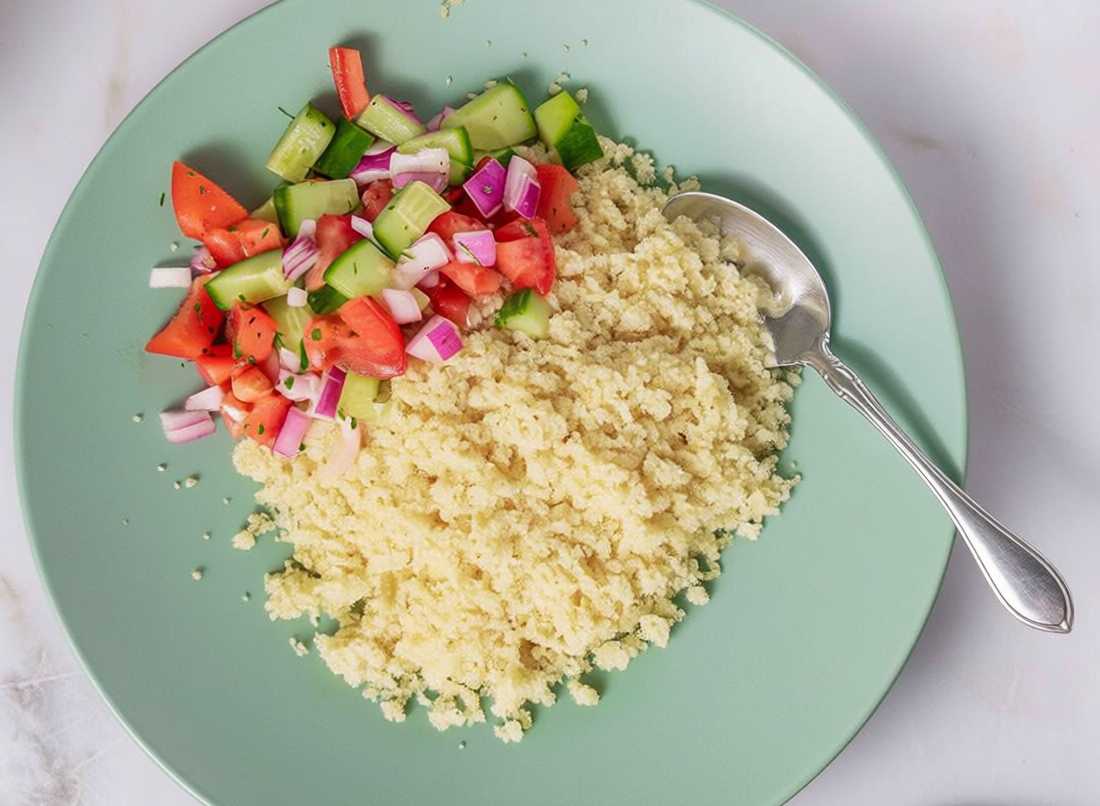
Attiéké is a fluffy, lightly fermented cassava couscous that originates from Côte d’Ivoire but is widely enjoyed in Guinea and across West Africa. Its light, grainy texture and slightly tangy flavor make it a refreshing and versatile side dish. Attiéké is commonly served with grilled fish, fried chicken, stews, and fresh vegetable salads, making it a staple in both everyday meals and special gatherings.
Because it is quick to prepare and pairs well with many flavors, attiéké has become one of the most popular cassava-based dishes across the region. It is especially appreciated for its ability to balance rich or spicy foods with its subtle acidity and airy texture.
What Is Attiéké?
Attiéké is made from cassava that has been grated, fermented, pressed, dried, and granulated to resemble couscous. This fermentation process gives attiéké its characteristic slightly tangy taste. Once steamed, the grains become soft, light, and fluffy, similar to couscous but with a more delicate texture.
Because attiéké absorbs sauces and juices very well, it is often served with tomato-onion relishes, grilled fish, fried meats, or spicy pepper sauce. In many West African homes, attiéké is considered both a side dish and a base for building complete meals.
Ingredients
- 2 cups attiéké (store-bought, packaged cassava couscous)
- ½ cup water
- 2 tablespoons oil (vegetable oil or coconut oil)
- Salt to taste
- Optional toppings: sliced onions, diced tomatoes, cucumbers, grilled fish, lemon juice
Instructions
- Place the attiéké in a large bowl. Sprinkle the water evenly over the grains. Use your fingers to gently separate and loosen the attiéké so the moisture is evenly distributed. Let it rest for 5 to 10 minutes to allow the grains to soften slightly.
- Transfer the moistened attiéké to a steamer basket or a heatproof bowl placed over simmering water. Cover and steam for 10 to 15 minutes. Stir once or twice during steaming to prevent clumping and to ensure even cooking.
- Remove the attiéké from the heat and drizzle it with oil. Fluff gently with a fork to separate the grains and enhance the airy texture. Season lightly with salt, adjusting to taste.
- If desired, sauté sliced onions in a small amount of oil until soft and lightly golden. Serve the onions on top of the attiéké for extra flavor.
- Finish with optional toppings such as grilled or fried fish, fresh tomatoes, cucumbers, and a squeeze of lemon juice.
Serving Suggestions
Attiéké is most commonly served with grilled snapper, fried tilapia, roasted chicken, or spicy tomato-onion salad. It pairs exceptionally well with pepper sauce, which adds heat and depth. Because of its light texture, attiéké works well as a lunch or dinner dish and is ideal for meals where several dishes are shared.
It is also popular at gatherings and celebrations, where it complements heavier stews and grilled foods without feeling overwhelming.
Tips and Variations
To make an attiéké salad, mix the cooked grains with chopped cucumbers, tomatoes, onions, and a light vinaigrette. For a richer taste, some cooks add butter or coconut oil instead of vegetable oil. If the fermentation flavor is too strong, briefly rinse the attiéké before steaming to reduce tanginess.
In traditional settings, attiéké may be steamed with a small piece of fermented cassava dough to enhance flavor, though this is optional when using packaged versions.
Storage
Store cooked attiéké in an airtight container in the refrigerator for up to three days. Reheat by steaming again or microwaving with a damp paper towel to restore moisture. Avoid leaving it uncovered, as it can dry out and lose its fluffy texture.

Kadidia is Afro Flavor Hub’s AI kitchen host — a digital character, not a real person. Recipes are published by the Afro Flavor Hub team.